
Humidity control is a major challenge for manufacturing plants in Singapore due to the hot and humid tropical climate. Excess moisture in the air can affect machinery, product quality, and even worker safety.
While air conditioning and dehumidifiers are commonly used, they are often not enough on their own for large industrial spaces. This is where large fans play an important supporting role.
By improving air circulation and reducing stagnant air pockets, these fans help maintain a more stable and controlled indoor environment. This leads to better production efficiency, improved safety, and lower operational costs.
What Is Humidity in Manufacturing Environments
Humidity refers to the amount of moisture present in the air. It is usually measured as a relative humidity percentage.
- High humidity means more moisture in the air
- Low humidity means drier air conditions
- Ideal levels depend on production requirements
Why It Matters in Factories
Humidity has a direct impact on industrial operations.
- Affects raw material stability
- Influences product quality and consistency
- Impacts machinery performance and lifespan
- Affects worker comfort and safety
Common Humidity Problems in Industrial Facilities
Condensation Issues
Excess moisture often leads to condensation problems.
- Water droplets form on surfaces
- Increased risk of rust and corrosion
- Damage to electrical systems and equipment
Product Quality Risks
Humidity can compromise production quality.
- Moisture absorption in raw materials
- Packaging deterioration
- Inconsistent product output
Workplace Safety Concerns
High humidity can create unsafe working conditions.
- Slippery floors due to condensation
- Reduced visibility in some environments
- Increased heat stress for workers
How Large-Scale Fans Help Control Humidity
Improving Air Circulation
One of the most effective ways to manage humidity is through airflow.
- Prevents stagnant air buildup
- Distributes moisture more evenly
- Reduces damp pockets in large spaces
Enhancing Evaporation
Air movement helps remove excess surface moisture.
- Speeds up drying of wet areas
- Reduces condensation formation
- Helps maintain drier surfaces
Supporting HVAC Systems
Industrial fans work alongside existing systems.
- Reduces load on air conditioning units
- Improves dehumidifier efficiency
- Enhances overall airflow balance
Why Air Movement Is Critical for Humidity Control
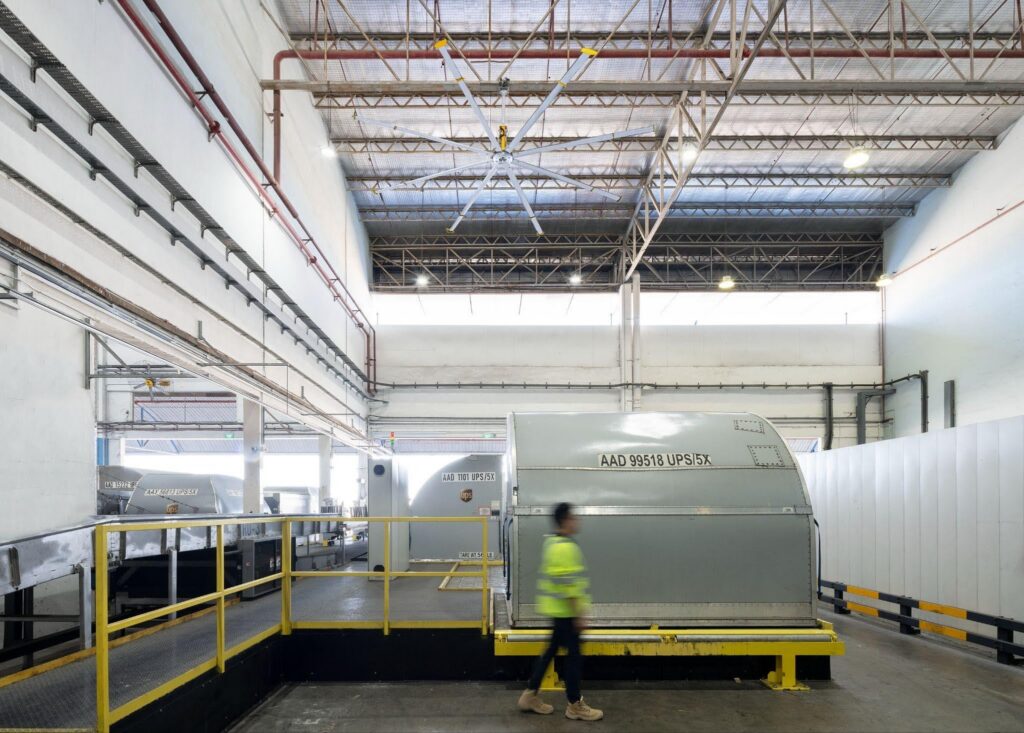
Preventing Moisture Build-Up
Without airflow, humidity accumulates in certain areas.
- Fans keep the air continuously moving
- Reduces the risk of damp environments
- Helps maintain consistent conditions
Maintaining Stable Conditions
Stable indoor environments are important for manufacturing.
- Reduces sudden humidity fluctuations
- Supports consistent production quality
- Improves equipment reliability
Reducing Mould and Mildew Growth
Moist environments encourage microbial growth.
- Air circulation discourages mould formation
- Protects materials and infrastructure
- Improves hygiene standards
Types of Large-Scale Fans Used in Manufacturing Plants
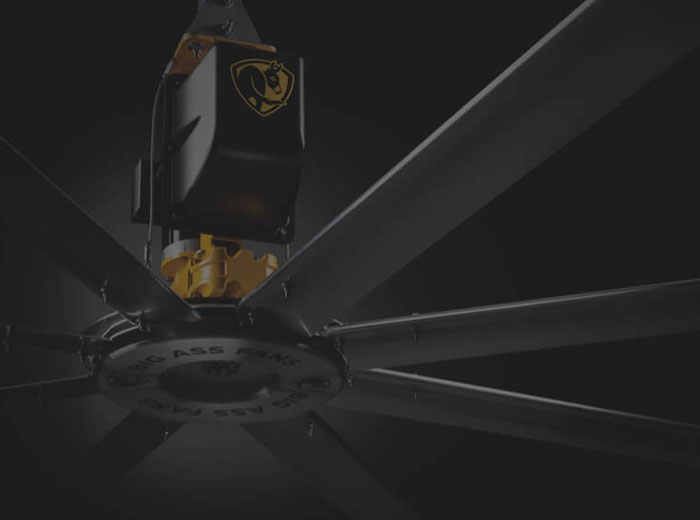
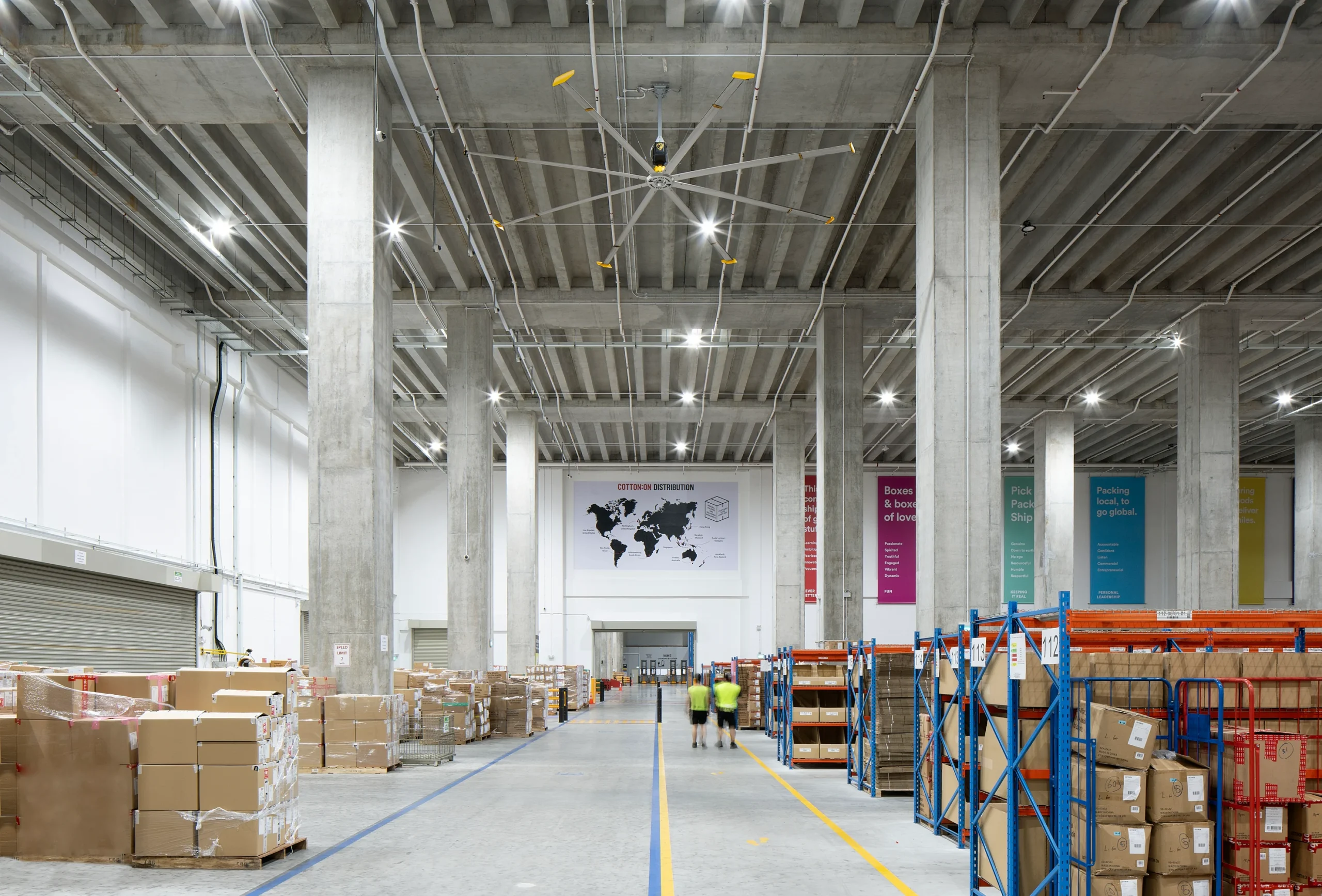
HVLS (High Volume Low Speed) Fans
These are commonly used in large facilities.
- Move large volumes of air efficiently
- Operate at low speeds for comfort
- Ideal for warehouses and factories
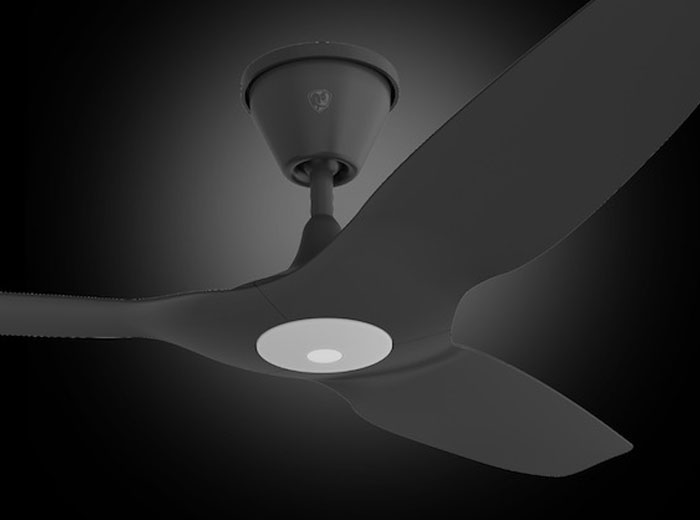
Ceiling Mounted Industrial Fans
Used for general airflow improvement.
- Provide wide coverage
- Help balance temperature and humidity
- Suitable for open floor layouts
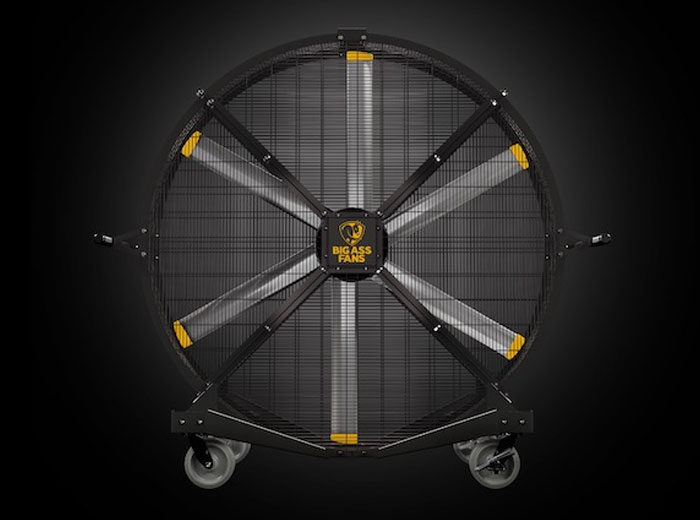
Wall-Mounted Industrial Fans
Used for targeted airflow control.
- Direct airflow to specific zones
- Useful for problem humidity areas
- Flexible installation options
Benefits of Using Industrial Fans for Humidity Management
Improved Air Quality
Better airflow leads to healthier environments.
- Reduces stale air buildup
- Improves ventilation efficiency
- Enhances overall comfort
Energy Efficiency
Fans reduce reliance on heavy cooling systems.
- Lower electricity consumption
- Reduced HVAC workload
- More sustainable operations
Equipment Protection
Humidity control protects machinery.
- Reduces corrosion risk
- Extends equipment lifespan
- Minimises maintenance costs
Better Worker Comfort
Comfortable workers perform better.
- Reduces heat stress
- Improves focus and productivity
- Enhances workplace satisfaction
Strategic Fan Placement in Manufacturing Plants
High Ceiling Areas
Large spaces require proper airflow planning.
- Install HVLS fans for wide coverage
- Ensure overlapping airflow zones
- Avoid stagnant air pockets
Production Lines
Airflow must support operations without disruption.
- Maintain consistent airflow across stations
- Avoid direct strong airflow on workers
- Balance comfort and efficiency
Storage Areas
Humidity control is critical for stored goods.
- Prevent moisture accumulation
- Protect raw materials
- Maintain product integrity
Integrating Fans with HVAC and Dehumidification Systems
Balanced Climate Control
Fans enhance existing systems.
- Improve air distribution
- Support consistent humidity levels
- Create more stable environments
Reduced Energy Consumption
Efficiency improves when systems work together.
- Less strain on air conditioners
- Reduced dehumidifier usage
- Lower operational costs
Smarter Environmental Control
Integrated systems perform better.
- More precise humidity regulation
- Improved factory conditions
- Better long-term reliability
Common Mistakes in Industrial Humidity Management
- Relying only on air conditioning systems
- Poor fan placement in large spaces
- Ignoring airflow direction planning
- Underestimating humidity fluctuations
- Lack of preventive maintenance
Why Singapore Factories Need Advanced Airflow Solutions
Singapore’s climate makes humidity control essential.
- High year-round humidity levels
- Large industrial facilities require strong airflow
- Energy efficiency is a key concern
- Strict production quality requirements
Conclusion
Large-scale industrial fans play an important role in managing humidity in manufacturing plants. While they are not a replacement for HVAC or dehumidification systems, they significantly improve airflow, reduce moisture buildup, and support stable production environments.
For factories in Singapore, combining strategic fan placement with proper environmental control systems leads to better efficiency, improved product quality, and safer working conditions. To explore the right solutions for your facility, get in touch with our team today.
FAQs
1. How do industrial fans reduce humidity in factories?
They improve air circulation, which prevents moisture from settling and helps maintain more stable humidity levels.
2. What is the best fan system for manufacturing plants?
HVLS fans are commonly used because they move large volumes of air efficiently across wide spaces.
3. Do HVLS fans help with moisture control?
Yes, they reduce stagnant air and improve evaporation, which helps manage humidity levels.
4. How does humidity affect manufacturing processes?
High humidity can damage materials, reduce product quality, and cause equipment corrosion.
5. Can fans replace dehumidifiers in industrial spaces?
No, fans complement dehumidifiers by improving airflow, but both systems work best together.