
When shopping for a ceiling fan in Singapore, most people focus on design, model, or noise level. But one of the biggest factors in comfort is simpler than you might think: placement.
Even a premium ceiling fan can feel ineffective if it’s too close to a wall, placed in the wrong spot, or positioned where airflow doesn’t reach the areas you actually use. This guide covers where a ceiling fan works best in Singapore homes, HDB flats, condos, and landed properties, where it often doesn’t, and how to make airflow feel comfortable, not just “technically moving air.”
If you want a recommendation based on your room size and ceiling height, the Big Ass Fans Singapore team can help you choose the right option.
The Real Goal of Placement: Airflow Where People Actually Are
A ceiling fan doesn’t need to “cool the entire room evenly” to be effective. Its primary goal is to create comfortable air movement where people spend time, such as:
- Where you sleep (bedroom)
- Where you sit and relax (living room)
- Where you dine or work (dining/study)
- Where you spend time outdoors (sheltered balcony/patio)
If the fan is centred in a space nobody uses, it may feel like it “doesn’t work,” even if it’s performing perfectly.
Bedroom Placement in Singapore: Comfort First
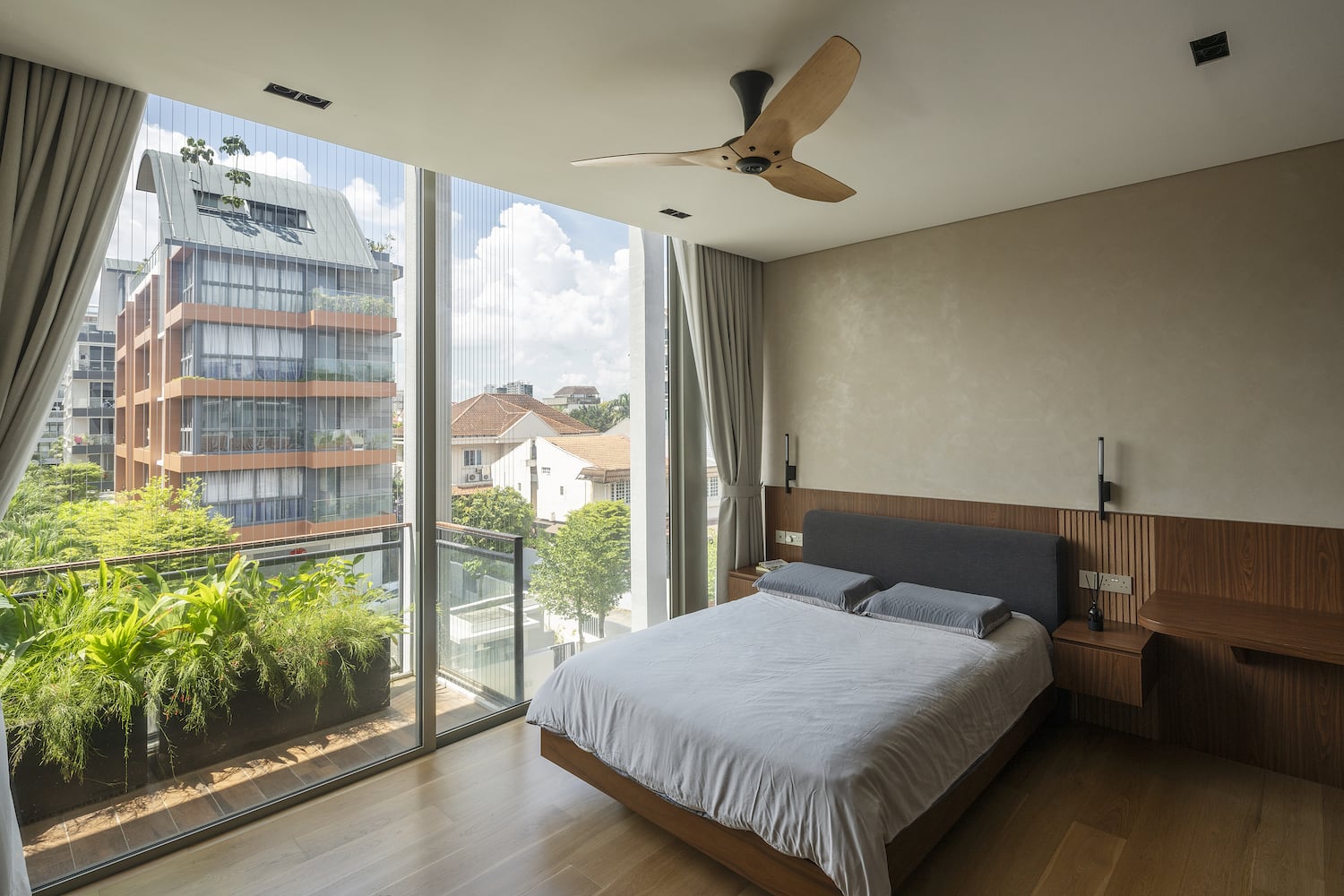
In bedrooms, the best placement creates gentle, consistent airflow across the bed area without feeling harsh.
What works well:
- Airflow covering the bed zone (not just the centre of the room)
- Comfortable airflow at lower speeds, especially for light sleepers
What often doesn’t work:
- Fan centred over a walkway while the bed is off to one side
- Airflow hitting directly at face level at night
Tip: If your bed isn’t centred, the “centre of the ceiling” isn’t automatically the best spot. The ideal placement makes the sleeping zone comfortable.
Living Room Placement: Serve the Seating Zone
Singapore living rooms often have a main seating area (sofa + coffee table) and an open space near entrances. A common mistake is placing the fan to “look symmetrical” instead of serving the seating zone.
What works well:
- Fan aligned with the main seating area
- Airflow covering where people sit for long periods
What often doesn’t work:
- The fan is centred in the room, while the sofa is pushed to one side
- Airflow mainly hits a corridor or walkway
Tip: In open-plan living rooms, prioritise the zone you want to be most comfortable most of the time (usually the seating area) rather than trying to cover everything.
Dining and Study Areas: Avoid Dead Zones
In areas where people sit still, such as dining tables or study desks, ceiling fans can make a big difference if airflow reaches the zone where people sit.
What works well:
- Fan positioned above the table or desk area
- Comfortable airflow at low-to-medium speeds
What often doesn’t work:
- The Fan is too far away because the area is considered “secondary”
- Airflow blocked by tall cabinets or ceiling features
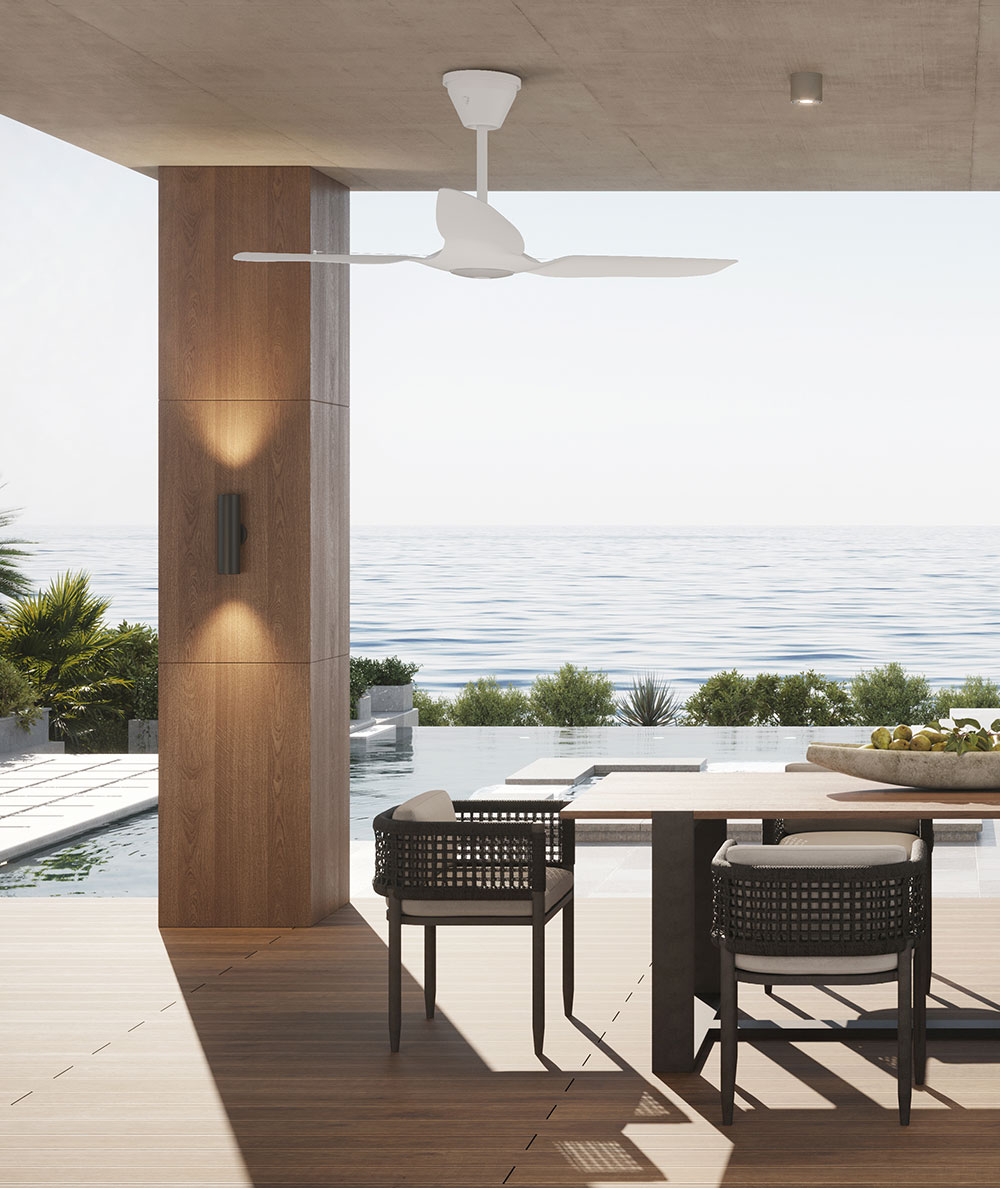
Balcony and Sheltered Outdoor Spaces
Balconies in Singapore are often semi-outdoor, sheltered but exposed to humidity and weather. Both placement and fan suitability matter.
What works well:
- Fan positioned where people sit or stand (seating zone)
- Avoid airflow being lost to open edges
What often doesn’t work:
- Fan too close to an open edge where airflow disperses
- Using an indoor-only fan in a semi-outdoor environment
For these spaces, explore our outdoor ceiling fans designed for durability in humid and sheltered conditions.
Common Placement Mistakes in Singapore Homes
- Placing the fan for symmetry instead of comfort
- A perfectly centred fan can feel ineffective if it doesn’t serve the living/sleeping zone.
- Ignoring how the room is used
- Placement should follow the main activity zone.
- Treating a balcony like an indoor room
- Balconies are humid and exposed; fan suitability and placement matter.
- Choosing a fan mismatched to the room size
- Placement helps, but a small fan may still underperform.
- Not considering ceiling height and clearance
- Comfort and safety depend on a proper setup for ceiling height.
Simple Checklist Before Installation
Before installing a ceiling fan, confirm:
- Where people spend time in the room (bed/sofa/table)
- If the fan is positioned to serve that zone
- Whether the space is indoor or sheltered outdoor
- If the fan matches the environment
- Room size and ceiling height for proper recommendations
Next Step
For advice on ceiling fan placement and the right model for your home, contact us and share:
- Room type (bedroom/living/dining/balcony)
- Room size (length × width)
- Ceiling height (if available)
- Indoor vs sheltered outdoor location
FAQs
1. Where should a ceiling fan be placed in a bedroom?
Ideally, where airflow covers the sleeping area comfortably, not just the ceiling centre.
2. Should a ceiling fan be centred in the room?
Not always. Placement should serve the main activity zone (bed/sofa/table).
3. Can I install a ceiling fan on a balcony in Singapore?
Yes, for sheltered outdoor areas, but the fan must suit the environment, and placement should serve the seating zone.
4. Why does my ceiling fan feel weak even on high speed?
Common reasons include poor placement, airflow dispersing into open areas, or a fan mismatched to the room size.
5. Does placement affect how quiet a ceiling fan feels?
Yes. Placement that forces higher speeds to feel airflow can make the fan seem louder.