The Heat Tax Is Hiding in Plain Sight
No financial report has a line for excessive heat, but hot facilities pay for it anyway, in lost time, harder work and good people who leave. Here's the research, and what to do about it.


What Is the Heat Tax?
The last eleven years have been the eleventh hottest ever recorded, and the average American city now sees twice as many heat waves as it did in the 1980s. U.S. heat-related deaths have more than doubled since 1999, and researchers estimate heat caused nearly 28,000 extra workplace injuries in a single year, most of them never labeled as heat-related at all. That hidden cost to people, safety, and performance is what we call the Heat Tax, and helping businesses stop paying it is why Big Ass Fans exist.
The heat tax is the price a business pays when its people work in excessive heat. It never arrives as a formal invoice. Instead, it shows up in behavior first: slower afternoons, more time spent recovering, more mistakes, and employees who go home drained or leave for a job in a better environment. No single dollar figure fits every facility. The cost is real all the same, and it is easy to ignore.
Why Put a Name on It?
Many companies have learned to live with hot working conditions. "That's just the way it's been" is a surprisingly durable capital-planning philosophy. A cost with a name is one a leadership team can see, measure in parts and decide to stop paying. This resource center gathers the independent research, our engineers' point of view and plain answers to the questions we hear most.
"The days when the fans were off, were bad days, and tiring days, when I got off work I felt completely drained and dehydrated."
Factory worker and participant in the UC Berkeley and University of Sydney field study, Baton Rouge, Louisiana
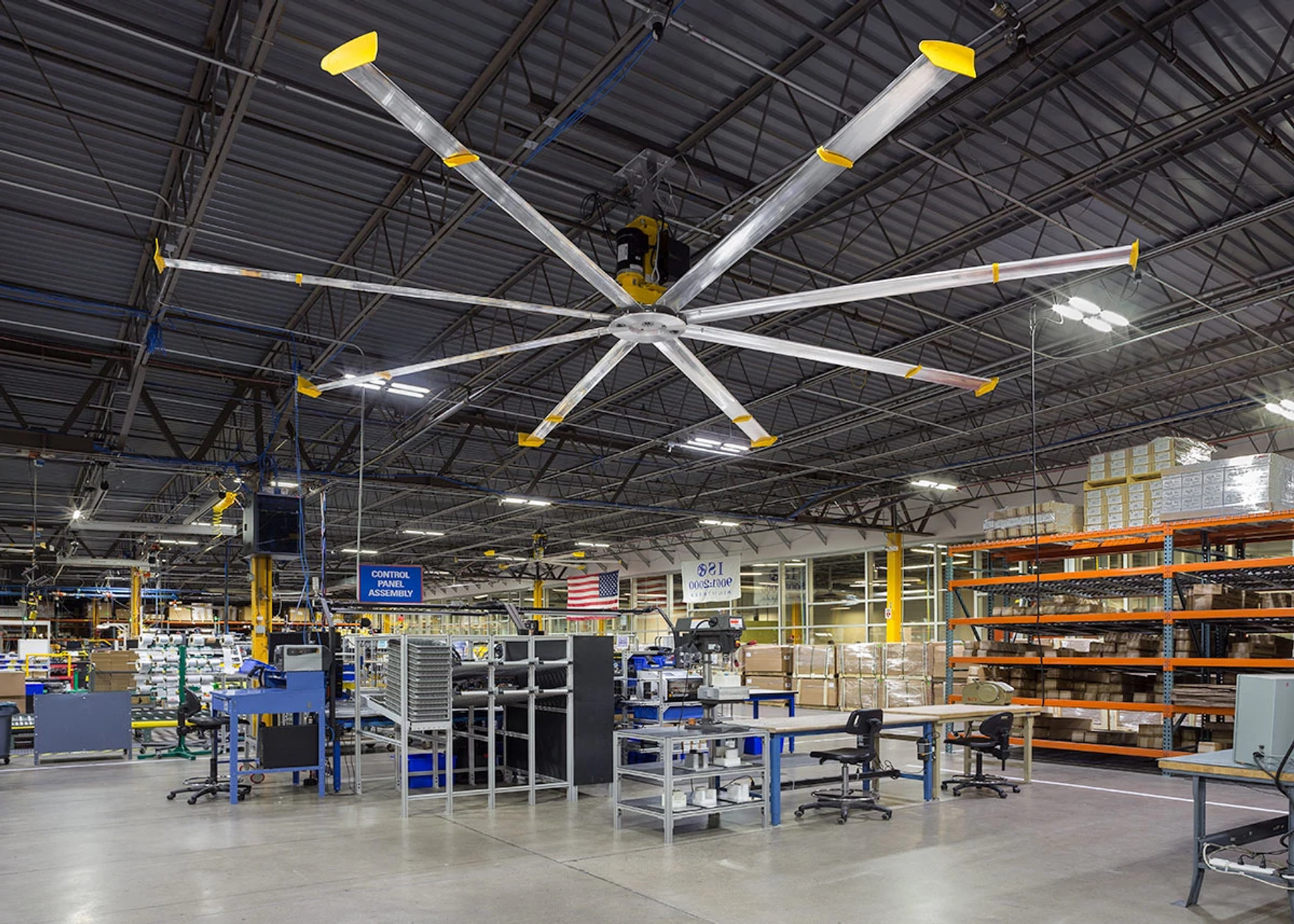
The Research:
30 Workers, Two Factories, Fans On and Fans Off
Researchers from UC Berkeley's Center for the Built Environment and the University of Sydney monitored 30 workers through their regular shifts at two manufacturing facilities in Baton Rouge, Louisiana, alternating periods with the industrial fans running and turned off. With the fans on, workers reported conditions comparable to an environment 10 degrees cooler. Seventy-nine percent felt more effective at their jobs, and the work itself felt easier.
The Point of View:
The Heat Tax Hiding in Plain Sight
By Jay Fizer, Big Ass Fans
There is no general-ledger account called "excessive heat," but many organizations pay the price anyway. Jay Fizer explains where the heat tax shows up, what the Berkeley field study proved and what it didn't, why cooling people is not a placebo, and why a fan is one piece of the puzzle and never the whole thing. He also takes on the hard part, which is how to weigh all of it against everything else in the capital plan.

Fans Cool People. They Don't Cool Rooms.
Air moving across the skin carries heat away from the body and helps sweat evaporate, which is the job the body produced it to do. If the air is 90 degrees, a fan doesn't turn the building into an 80-degree space. The workers in the study experienced a cooling effect comparable to lowering the air temperature by roughly 10 degrees. Anyone who has stood in a breeze at the beach understands it.
Will air movement help in your conditions? Try the Fans & Heat module in UC Berkeley's CBE Thermal Comfort Tool below.
The Heat Tax, by the Numbers
10°F cooler
How conditions felt to workers when the industrial fans were running
79% of workers
felt more effective at their jobs with the fans on
100% of workers
surveyed said having fans running at work is important
These numbers come from people doing real manufacturing work through a Louisiana summer. They describe how the floor felt and how hard the work seemed, which is where the heat tax starts. They are evidence of perceived effectiveness, and we say so plainly. The research summary explains what was measured, what wasn't and what it means for your floor.
The Tax Doesn't Stop in Winter
Heat costs money in the cold months too, because warm air rises and collects at the ceiling while the people work down on the floor. A field study in a 15,000-square-foot aircraft hangar in Kentucky found a 6-degree difference between floor and ceiling with the fans off. With the fans on, the difference fell to 0.7 degrees. Weather-normalized gas use dropped 29%, an estimated $4,150 in seasonal savings for roughly $50 in fan electricity. Winter operation often provides the most quantifiable financial return, and many companies use those heating savings to justify the investment.
Heat Tax Frequently Asked Questions

Case Studies
See how companies like yours put a number on cooler working conditions.

Find The Right HVLS Fan For You
Ready to browse Big Ass HVLS Fans?

Let Us Handle It
Work with Big Ass Fans to find the best solutions for your space.


